

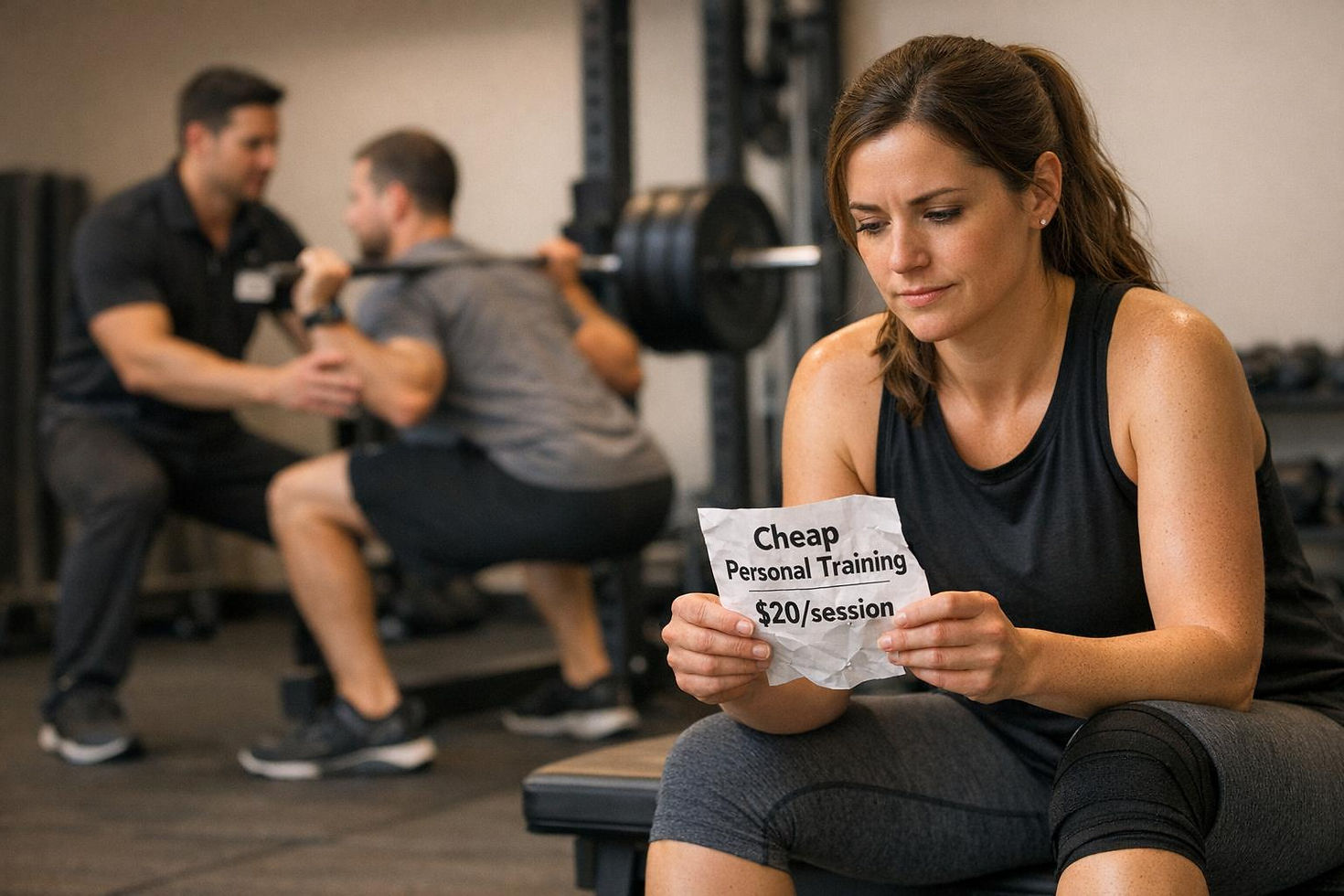
Why Cheap Personal Training Often Costs You More Long-Term
- David Cozzens
- Feb 16
- 12 min read
Updated: Feb 18
Choosing a personal trainer solely based on price can backfire. While $30 per session might seem like a deal, it often leads to wasted time, stalled progress, and even injuries. Many low-cost trainers lack proper qualifications, rely on generic programs, and fail to provide personalized guidance. The hidden costs - like medical bills for injuries or time lost correcting bad habits - can far exceed the initial savings.
Key Takeaways:
Low-Cost Risks: Inexperienced trainers often use cookie-cutter routines, skip assessments, and may prioritize trends over science.
Injury Costs: Poor guidance increases the risk of injuries, which can lead to expensive rehabilitation and long recovery times.
Slower Progress: Generic plans often fail to align with individual goals, wasting effort and delaying results.
Quality Training Benefits: Skilled trainers focus on proper form, tailored programs, and measurable progress, helping you achieve goals faster and safely.
Investing in a qualified trainer may cost more upfront, but it ensures better results, fewer risks, and long-term success. Your health and fitness are worth it.
Personal Trainer Toxic Traits - Avoid these to succeed!
The Risks of Low-Cost Personal Trainers
Low-cost personal trainers might seem like a great deal at first glance, but they often come with hidden risks that can seriously derail your fitness journey.
Poor Qualifications and Missing Expertise
The fitness industry has minimal regulation, which means almost anyone can label themselves a personal trainer - no license required [7]. As Francis Neric, National Director of Certification at the American College of Sports Medicine (ACSM), points out:
Anyone can say they're a personal trainer [7].
Many budget trainers rely on quick, easy-to-obtain certifications from unaccredited organizations. Unlike respected programs like NASM or ACE, which require rigorous exams covering topics like anatomy, nutrition, and emergency procedures, these cheaper certifications can often be earned online for as little as $99 to $249 over a weekend [8][9]. This shortcut leaves trainers without the scientific knowledge needed to perform proper health assessments, design safe workout plans, or coach complex movements like barbell exercises. These exercises demand a deep understanding of body mechanics and the ability to correct imbalances [8].
The risks go beyond ineffective workouts. Budget trainers often base their methods on social media trends rather than solid, evidence-based research. Many also lack professional liability insurance, leaving you vulnerable if an injury occurs [9]. Experts estimate that 90% of personal trainers fail to deliver real value because they lack the expertise to create effective programs [2].
This lack of proper training often leads to generic, poorly designed programs that fail to meet individual needs.
Cookie-Cutter Programs That Fail
One of the biggest problems with low-cost trainers is their tendency to skip essential assessments. These assessments should evaluate things like movement patterns, injury history, and lifestyle factors [10][11]. Instead, budget trainers often rely on "one-size-fits-all" routines that are easier for them to manage but fail to address your unique goals.
This generic approach can completely miss the mark. For instance, someone looking to gain muscle might be given light circuit training, while a client aiming for fat loss might end up with arm isolation exercises - neither of which aligns with their objectives [2]. Fitness author Sean Nalewanyj warns:
If all they do is hand you some generic "one size fits all" meal plan consisting of boiled chicken breast, broccoli and cottage cheese, you'll want to immediately make a bee-line for the exit [2].
In addition to misaligned goals, these trainers often rely on machine-based exercises rather than barbell training. Machines are easier to teach but less effective for long-term progress [8]. Without adjustments based on your individual response to workouts, your progress can stall quickly, leaving you frustrated and wasting your effort.
Weak Support and Accountability
Another major issue with low-cost trainers is the lack of support and accountability. These trainers often focus only on outcome goals - like the number on the scale - without tracking the behaviors that drive those results, such as workout consistency, sleep quality, or nutrition habits [11]. When results don’t show up immediately, clients can lose motivation because their hard work isn’t acknowledged.
On top of that, many budget trainers fail to track basic metrics like sets, reps, or rest intervals. Without this data, it’s impossible to measure progress effectively, leaving clients feeling stuck and unsure if they’re improving [11]. As John Berardi, PhD, CSCS, from Precision Nutrition explains:
The point here is that you miss what you don't measure and record. Also, without metrics, no one knows if progress is actually being made [11].
The lack of supervision further compounds the problem. Low-cost trainers are more likely to check their phones during sessions rather than provide the constant feedback and motivation you need [2]. Many also improvise workouts on the spot instead of following a structured, long-term plan. This lack of planning leads to plateaus and prevents you from hitting specific milestones [11].
The Real Long-Term Costs of Cheap Training
What seems like a great deal upfront can quickly spiral into a costly mistake. Those initial savings often disappear once you factor in injuries, stalled progress, and wasted time. Let’s break down how these hidden expenses can add up over time.
Higher Injury Risk
Inexperienced trainers can lead you straight into harm’s way. Exercises performed under poor guidance can result in shoulder impingement, rotator cuff tears, knee inflammation, back sprains, or even herniated disks [12]. And it doesn’t stop there - more severe injuries like fractures, knee dislocations, and Achilles tendon ruptures are also possible [12]. Erik Strouse, a strength and conditioning expert, emphasizes:
It's scary when you see a trainer do something that could cause a life-long injury. [12]
Ignoring pain during workouts can lead to chronic damage, sometimes requiring surgery to fix. Gregory Florez, a spokesperson for the American Council on Exercise, highlights just how serious this can get:
Deaths and serious injuries occur every year. [12]
Recovering from such injuries isn’t cheap. Rehabilitation trainers alone can cost between $80 and $150 per session [14]. Add to that the medical bills, time off work, and extended gym absences, and suddenly that "budget-friendly" trainer doesn’t look so affordable anymore.
The risks are even higher for clients with underlying health conditions like diabetes, heart disease, or arthritis. Many trainers skip personalized health screenings, prescribing routines that put these individuals in danger [12][5]. Alarmingly, two-thirds of 2,700 certified personal trainers surveyed by the National Board of Fitness Examiners admitted to knowing trainers who were incompetent [12].
But the damage isn’t just physical - poor training can also stall your progress.
Slower Progress and Failed Goals
A poorly designed program doesn’t just waste your money - it wastes your time. Generic routines often leave clients stuck with little to no progress [2]. Fitness author and coach Sean Nalewanyj doesn’t mince words:
The plain fact is that far more personal trainers than not are quite simply a waste of money, time and effort for the average beginner trying to get into shape. [2]
Trial-and-error training can be especially frustrating. For example, an inexperienced trainer might give a 40-year-old office worker the same program they’d use for a 20-year-old athlete. The result? Months of wasted effort [1]. Worse yet, fixing bad habits learned during this time can take twice as long as learning the correct technique from the start [1].
Another common pitfall of budget trainers is the lack of nutrition coaching. Since diet plays a huge role in achieving fitness goals, this omission can leave clients spinning their wheels. Without proper guidance, you could end up paying for months of training without seeing any changes on the scale [2][3]. And let’s not forget the opportunity cost - those hours spent on ineffective workouts are hours you’ll never get back. Time with family, work, or personal growth is sacrificed for nothing [15].
With around 90% of personal trainers deemed ineffective by industry experts, it’s clear that cutting corners on training often leads to disappointment and regret [2]. Investing in quality training from the start can save you from these setbacks and help you achieve real, lasting results.
Cost Comparison: Cheap vs. Quality Personal Training
Price and Features Comparison
The difference between budget-friendly and higher-quality personal training goes well beyond the hourly price tag. Cheap sessions typically range from $25–$50 per hour, while quality training starts at $60 and can go beyond $150 per session [13]. Here's a closer look at how they compare:
Feature | Cheap Training ($25–$50/session) | Quality Training ($60–$150+/session) |
Trainer Credentials | Often weekend-certified or newly qualified | Degrees in Kinesiology/Exercise Science; NCCA-accredited certifications |
Program Design | Standardized routines | Tailored, data-driven plans |
Safety & Form | Basic oversight with higher risks of overlooked mistakes | Expert correction focused on preventing injuries |
Support Included | Limited to workout supervision | Includes nutrition advice, progress tracking, and between-session guidance |
Results Timeline | Slower due to generic approaches | Approximately 30% faster strength gains with personalized programs |
This breakdown highlights why quality training often justifies the higher cost - it provides more comprehensive support and measurable results.
Why Quality Training Delivers Better Value
The benefits of quality personal training go well beyond the initial price. It’s not just about paying more; it’s about achieving better outcomes, avoiding costly setbacks, and saving time in the long run. Investing in a skilled trainer now can help prevent injuries and ensure steady progress. Studies suggest clients working with qualified trainers experience 30% greater strength gains and are more likely to maintain their fitness routines after a year [16].
Joseph Depena, Founder of VP Fitness, explains it perfectly:
The right personal trainer isn't an expense; they're an investment in your long-term health that pays dividends long after your sessions end. [13]
Quality trainers do more than guide you through workouts - they teach you how to train effectively. This knowledge builds confidence and independence over time, helping you sustain your fitness journey. On the other hand, a $40 session with no clear structure or purpose can end up costing more when you factor in wasted time, slower progress, or even potential injuries.
When you consider the faster results, reduced risk of injury, and long-term benefits, quality training offers far better value. It’s an investment that pays off in both immediate results and lasting fitness habits.
The Benefits of Choosing Train with Dave
Train with Dave provides a smarter, more effective alternative to traditional training methods by focusing on expert qualifications, personalized programs, and measurable results.
Qualified Trainers with Professional Credentials
At Train with Dave, every trainer is a certified exercise physiologist, not just someone with a quick and basic certification. This distinction is critical because exercise physiologists hold degrees in fields like exercise science or kinesiology. This background ensures they have a thorough understanding of anatomy, physiology, and how the body responds to training [6][18]. Their expertise allows them to address complex issues, such as managing chronic pain or preventing injuries - areas where many generic trainers fall short.
On top of their formal education, these trainers complete additional in-house certifications in nutrition. This means you receive expert dietary advice, steering clear of fad diets or unnecessary supplement recommendations [9]. As Shara Vigeant, BA, NSCA-CPT, explains:
A formally educated personal trainer will ALWAYS be a better investment than a weekend certified trainer and, unfortunately, more expensive [6].
These highly qualified trainers craft individualized plans to help you achieve your unique fitness goals.
Customized Fitness and Nutrition Plans
Train with Dave designs programs based entirely on your needs, whether your focus is weight loss, muscle building, or addressing chronic pain. Instead of cookie-cutter workouts, you’ll follow scientifically developed progressions that adapt as you improve. What sets these programs apart is the integration of nutrition planning, which amplifies your results [16][4].
Since nutrition plays a more significant role in achieving fitness goals than exercise alone, having certified nutrition expertise built into your plan ensures better outcomes [16]. Rather than guessing what to eat or following generic meal plans, you’ll get personalized dietary guidance tailored to support your specific training objectives.
Data-Driven Results and Free Consultations
Train with Dave combines professional expertise with cutting-edge technology to ensure your progress is both measurable and efficient. Using a proprietary app, they provide real-time analytics to track your improvements and make necessary adjustments to your program [6][17]. Studies show that working with qualified trainers can lead to 30% greater strength gains compared to self-directed programs over 12 weeks [16].
To help you decide if their approach aligns with your goals, Train with Dave offers a complimentary consultation - a risk-free way to experience their method before committing. With sessions starting at $60, you’re investing in professional guidance that delivers faster results while minimizing the risk of injury. Compared to cheaper alternatives that often fail to deliver, this is a smarter long-term investment [18].
How to Evaluate Personal Training Options
Key Criteria for Selecting a Trainer
When choosing a personal trainer, credentials should be your top priority. Look for trainers certified by NCCA-accredited organizations like NASM, ACE, ACSM, or NSCA. These certifications stand out because they require rigorous exams and ongoing education. As Francis Neric, National Director of Certification at ACSM, points out:
Anyone can say they're a personal trainer [7].
To confirm a trainer's qualifications, check the U.S. Registry of Exercise Professionals or the certifying organization’s website to ensure their certification is up-to-date. Trainers with academic backgrounds in fields like exercise science or kinesiology bring an added layer of expertise, often surpassing the basics of certification. Additionally, ask for two client references to gain insight into their communication skills and effectiveness.
Be wary of warning signs that suggest poor-quality training. Avoid trainers who push supplements aggressively, promise unrealistic weight loss results, or jump into high-intensity workouts without assessing your fitness level or discussing your injury history. If a trainer spends sessions glued to their phone or struggles to explain how specific exercises help you reach your goals, it’s a clear indication they’re not offering the level of care and professionalism you deserve.
These credential checks and observations ensure you’re setting a solid foundation for evaluating the overall value of a trainer, which we’ll explore further in the next section.
Choosing Value Over Low Prices
While certifications are essential, assessing the overall value a trainer offers is just as important. Focusing solely on the lowest hourly rate often leads to disappointment. Trainers with minimal credentials may lack the expertise required to help you achieve your goals safely and effectively. The cheapest option often comes with hidden costs - like injuries, wasted time, or lack of progress.
For example, Train with Dave provides a free consultation, allowing you to experience their approach without committing upfront. Their sessions start at $60 and are led by exercise physiologists with formal education and in-house nutrition certifications. This level of expertise stands in stark contrast to trainers with quick, weekend certifications who may not have the knowledge to create tailored programs or prevent injuries.
Shannon Fable, a fitness business consultant, highlights what truly matters in a personal trainer:
Your personal trainer should empower you... They shouldn't just be wowing you with their six-pack abs and their craziest movements. They should be wowing you with the way that they make you feel. [19]
For in-person training, prioritize quality over low initial costs. Investing in qualified professionals who use evidence-based methods and incorporate nutrition guidance may cost more upfront, but it pays off in the long run. By choosing trainers with the right expertise, you reduce the risk of injuries, avoid wasted effort, and set yourself up for sustainable progress. Quality training is about building a foundation for long-term success, not just saving a few dollars in the short term.
Conclusion
Choosing budget personal training might seem like a money-saver at first, but it often leads to wasted time, potential injuries, and mounting frustration. As Shara Vigeant, BA, NSCA-CPT, CFSC, aptly states:
If you hire a $30 per hour, weekend certified personal trainer, you will get a $30 per hour weekend certified quality of training and experience [6].
Investing in training with qualified exercise professionals does more than just prevent injuries - it helps you progress faster and build habits that stick. The costs of recovering from poor training far outweigh the initial expense of proper guidance [1][17].
When you think about it, your health is worth the investment. Your body is the only vehicle you’ll have for life, and professional training isn’t a luxury - it’s a smart decision for your well-being and future. With sessions starting at $60 and a free consultation to experience the benefits firsthand, Train with Dave offers personalized programs, nutrition advice, and the accountability you need to achieve lasting results.
FAQs
What should a first session include?
When you attend your first personal training session, it’s all about getting to know you - your fitness level, how you move, and any areas that might need extra attention, like muscular imbalances or posture issues. The trainer might check your range of motion, ensure you’re using proper form, and walk you through how to use gym equipment. They’ll also take time to chat about your goals and any health concerns you might have. All of this sets the stage for a tailored plan, complete with advice on exercise techniques and wellness tips to help you make steady progress over time.
How can I verify a trainer’s credentials?
To ensure a trainer's qualifications, start by verifying their certification through a recognized organization. Well-known programs like NASM or ACSM often provide tools to check certifications. You can also turn to resources such as the United States Registry of Exercise Professionals (USREPS) or simply ask the trainer to share their certification details. Taking the time to confirm their credentials not only establishes their credibility but also helps minimize risks like ineffective workouts or potential injuries.
How do I know if a plan is truly personalized?
A personalized fitness plan isn’t just a one-size-fits-all approach. It’s crafted specifically to align with your individual needs, goals, and fitness level. This means taking into account your health history, strengths, and preferences. A solid plan should also adapt as you progress, with adjustments made along the way to keep you on track.
The right trainer will take the time to perform detailed assessments, track your results, and refine the plan to suit your evolving needs. If your program feels rigid or overly generic, it’s a red flag that it might not be truly tailored to you.


Comments