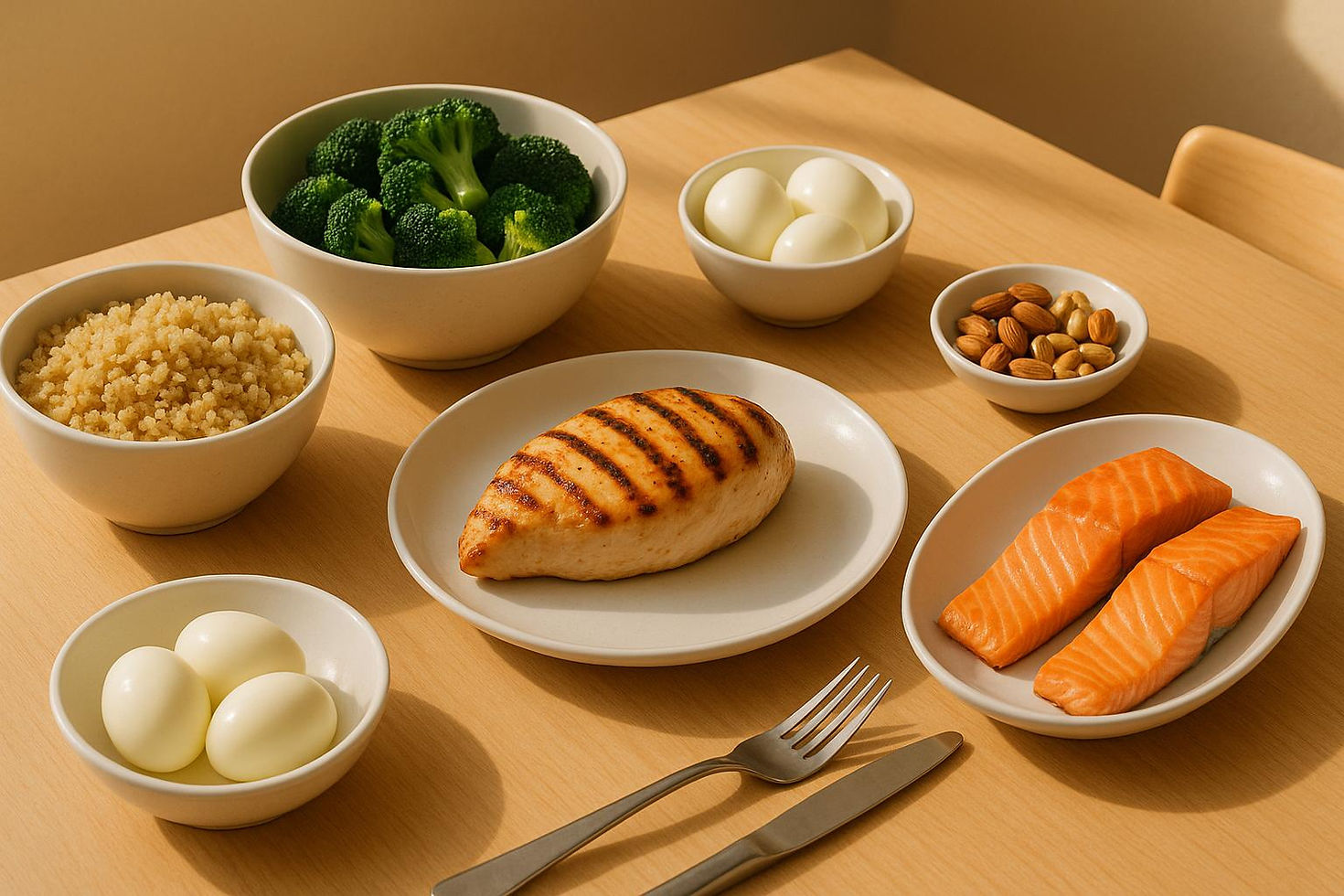
Want to hit 150–200g of protein daily without relying on endless shakes? Here’s how you can do it with simple meal ideas that fit into your routine. By spreading protein intake across breakfast, lunch, dinner, and snacks, you’ll support muscle growth, manage hunger, and maintain energy levels.
Key Takeaways:
Breakfast: Start strong with options like eggs with turkey sausage, Greek yogurt bowls, or protein pancakes (40–50g protein per meal).
Lunch/Dinner: Focus on lean meats, fish, or plant-based proteins paired with rice, quinoa, or veggies (50–60g protein per meal).
Snacks: Quick fixes like Greek yogurt with nuts, protein shakes, or cottage cheese help fill gaps (15–30g protein per snack).
Daily Plans: Tailor your day with meal blueprints for 150g, 175g, or 200g protein targets.
This guide simplifies meal planning with easy-to-follow recipes and practical tips. Whether you’re prepping for the week or looking for quick fixes, these strategies help you hit your protein goals without overcomplicating your routine.
I Prepped 5 High-Protein Meals in 1 Hour - Here’s How
1. High-Protein Breakfasts
Start your morning strong with these breakfast ideas, each packing 40–50g of protein. They're quick, delicious, and designed to give your body the fuel it needs.
Egg and Meat Combo Plate: Cook up 6 eggs (36g protein) scrambled or fried, alongside 4 oz of turkey sausage or lean ground beef (24g protein). Pair it with whole-grain toast spread with almond butter for a balanced meal. This hearty plate takes just 10 minutes to prepare and provides essential amino acids for recovery.
Greek Yogurt Power Bowl: Mix 2 cups of plain Greek yogurt (40g protein) with 1/4 cup granola, fresh berries, and 2 tablespoons of hemp seeds (6g protein). Add a drizzle of honey for sweetness. This no-cook option is perfect for busy mornings, delivering a total of 46g of protein.
Protein Pancake Stack: Blend together 1 cup of cottage cheese (28g protein), 3 eggs (18g protein), 1/2 cup of oats, and a teaspoon of vanilla extract. Cook the batter into pancakes and top with sugar-free syrup. Make a double batch on Sunday, and you'll have a quick, protein-packed breakfast ready to reheat all week.
Breakfast Burrito Bowl: Combine 1 cup of egg whites (26g protein) with 4 oz of grilled chicken breast (35g protein), black beans, salsa, and a sprinkle of cheese. This bowl delivers an impressive 61g of protein. Prep the ingredients in advance, and you can throw it together in under 5 minutes.
2. Protein-Packed Lunches and Dinners
Your main meals are the cornerstone of your daily protein intake, especially when they center on high-quality sources like lean meats, fish, or plant-based options. These dishes are designed to help you meet your protein needs while supporting muscle recovery - all without sacrificing flavor or convenience.
Grilled Chicken and Rice Bowl: Grill an 8 oz chicken breast seasoned to your liking, then serve it over 1 cup of brown rice with steamed broccoli on the side. Add a dollop of hummus for extra flavor. The whole meal comes together in about 20 minutes. Pro tip: Grill extra chicken at the start of the week and store it in the fridge for quick lunches or dinners.
Salmon and Quinoa Plate: Bake a 7 oz salmon fillet at 400°F for 12–15 minutes. Pair it with 1 cup of cooked quinoa and roasted asparagus. For a little extra protein, toss in some edamame on the side.
Lean Beef Stir-Fry: Sizzle 7 oz of lean sirloin with colorful bell peppers, snap peas, and onions in 1 tablespoon of olive oil. Serve it over 1 cup of cauliflower rice if you're watching carbs, or go for regular rice if you need more energy. Sprinkle in a couple of tablespoons of cashews for added crunch and protein.
Turkey Chili: Cook 1 lb of ground turkey in a large pot with diced tomatoes, kidney beans, onions, and a mix of chili spices. This recipe makes four servings - perfect for meal prepping. Double the batch and freeze portions for quick, microwave-friendly lunches later in the week.
3. Quick Protein Snacks
Need a quick pick-me-up between meals? These protein-packed snacks are easy to prepare, portable, and perfect for keeping your energy levels steady throughout the day.
Greek Yogurt with Nuts and Berries: Take plain Greek yogurt, add a handful of almonds or walnuts, and toss in some fresh blueberries. This snack is not only delicious but also easy to pre-portion for busy days.
Protein Shake with Nut Butter: Blend a scoop of your favorite protein powder with 8 ounces of milk (dairy or almond), a tablespoon of peanut butter, and a few ice cubes. Want it creamier? Throw in half a frozen banana. It’s a great option to fuel up before or recover after a workout.
Hard-Boiled Eggs and String Cheese: Combine hard-boiled eggs with a stick of part-skim mozzarella string cheese. This duo is simple, satisfying, and always ready to go when hunger strikes.
Cottage Cheese with Fruit: Pair low-fat cottage cheese with diced pineapple for a touch of sweetness, or mix in cherry tomatoes for a savory twist. Sprinkle with a bit of black pepper or cinnamon to elevate the flavor. This snack comes together in no time!
4. Daily Protein Blueprints
Here are some meal plans to help you organize your day and hit your protein goals with ease. Pick the one that matches your target and lifestyle.
The 150g Classic Plan: Start your morning with a 4-egg scramble, 2 oz of turkey sausage, and a slice of whole wheat toast - this packs in 40g of protein. For lunch, grill an 8 oz chicken breast and serve it over mixed greens with quinoa and a light vinaigrette for a total of 60g protein. Dinner includes a 6 oz sirloin steak paired with roasted sweet potatoes and steamed broccoli, adding another 45g of protein. To round things out, sip on a protein shake between meals.
The 175g Meal Prep Blueprint: Breakfast includes an omelet made with 6 egg whites, 2 whole eggs, and 2 oz of lean ham, delivering 35g of protein. For lunch, enjoy an 8 oz baked salmon filet with brown rice and asparagus, which provides 50g of protein. Dinner offers 8 oz of ground turkey mixed into a veggie stir-fry with bell peppers and snap peas, contributing 55g of protein. For snacks, try Greek yogurt topped with almonds in the afternoon and cottage cheese before bed.
The 200g High-Volume Plan: Start strong with a breakfast burrito filled with 3 whole eggs, 4 oz of lean ground beef, black beans, and a whole wheat tortilla, giving you 50g of protein. At lunch, have two grilled chicken thighs (6 oz total) on a large spinach salad with chickpeas and feta cheese, totaling 55g of protein. Dinner features 10 oz of white fish like cod or tilapia, served with roasted Brussels sprouts and wild rice, for another 60g of protein. To hit your goal, add two protein shakes spaced throughout the day.
Select the plan that aligns with your daily routine, and fine-tune it as needed to meet your specific needs.
Conclusion
Reaching a daily protein intake of 150g–200g doesn’t require fancy meal prep or expensive supplements. By sticking to the strategies shared here - like starting your day with protein-rich breakfasts, enjoying hearty lunches, and incorporating quick, simple snacks - you can stay on track without overcomplicating things. Whole foods such as chicken, fish, eggs, and Greek yogurt should be your go-to options, making it easier to maintain consistency without getting overwhelmed.
Your daily plan should fit your schedule and preferences. Thoughtful protein planning not only supports muscle growth but also helps with fat loss and overall health when paired with regular training. You can tweak portion sizes, experiment with different meal combinations, and swap ingredients to keep things fresh. Prefer turkey over chicken or cottage cheese instead of Greek yogurt? No problem - adjust your meals to fit your tastes and lifestyle.
For a more tailored approach, Train with Dave offers expert guidance from professionals with both exercise physiology and nutrition certifications. If you’re in Orange County, CA, you can work directly with their team to create personalized workout and nutrition plans that align with your goals. It’s a simple way to take your fitness and nutrition to the next level.
FAQs
How can I modify these meal plans to fit a vegetarian diet?
To adjust these meal plans for a vegetarian diet, replace animal-based proteins with plant-based alternatives such as tofu, tempeh, edamame, seitan, lentils, chickpeas, and beans. You can also incorporate Greek yogurt, cottage cheese, quinoa, buckwheat, and other protein-packed grains.
For added flexibility, try including plant-based protein powders in shakes or recipes. Combine them with high-protein vegetables, nuts, and seeds to create well-rounded meals that align with your daily protein needs. Keeping a variety of ingredients in your meals is essential to ensure you get all the nutrients you need while staying on track!
What are some quick high-protein snacks if I'm lactose intolerant?
If you're lactose intolerant, there’s no shortage of high-protein snacks to keep you fueled. For a savory bite, try turkey or chicken jerky, hard-boiled eggs, or even canned tuna or salmon. Prefer plant-based options? Go for hummus paired with fresh veggies, edamame, or a handful of nuts and seeds. These snacks are not only packed with protein but are also simple to grab and enjoy on the go.
How can I figure out the right amount of protein for my fitness goals?
To figure out how much protein you need each day, take your body weight in pounds and multiply it by 0.8–1.2 grams for general health. If you're working on building muscle or improving fitness, aim for 1.2–2.0 grams per pound of body weight. Tailor this range to match your activity level, fitness goals, and dietary habits to get the best results.
For instance, if you weigh 150 pounds and your goal is muscle growth, you should target 180–300 grams of protein daily. Spread this amount evenly across your meals to help your body absorb it more effectively and maximize your progress.
Related Blog Posts
Want a day planned around your macros?
Free 45-minute consultation at Train With Dave in Irvine, Orange, or Laguna Hills. We'll build the exact meals that fit your week.
Book Your Free Consultation →Frequently Asked Questions
Can I hit 150g+ protein without shakes?
Yes. Strategic meal building — eggs, chicken, Greek yogurt, fish, cottage cheese — gets most people to 150–180g from whole food alone.
How do I adapt for vegetarian?
Tofu, tempeh, edamame, seitan, Greek yogurt, cottage cheese, and legumes. Add a plant-based protein powder for convenience.
How do I know how much protein I need?
General range: 0.7–1.0 grams per pound of body weight. Your Train With Dave coach will tune it to training, goals, and phase.
How much does training cost in Orange County?
Train With Dave averages $60 to $80 per session — and that includes a fully customized workout program, personalized nutrition plan, training app, and direct trainer access between sessions.
Ready to Transform Your Body in Orange County?
Train With Dave has helped thousands of Orange County residents achieve their goals — with locations in Irvine, Orange, and Laguna Hills.
Book Your Free Consultation: calendly.com/trainwithdaveoc/1hr
No pressure. No commitment. Just a real conversation about your goals.